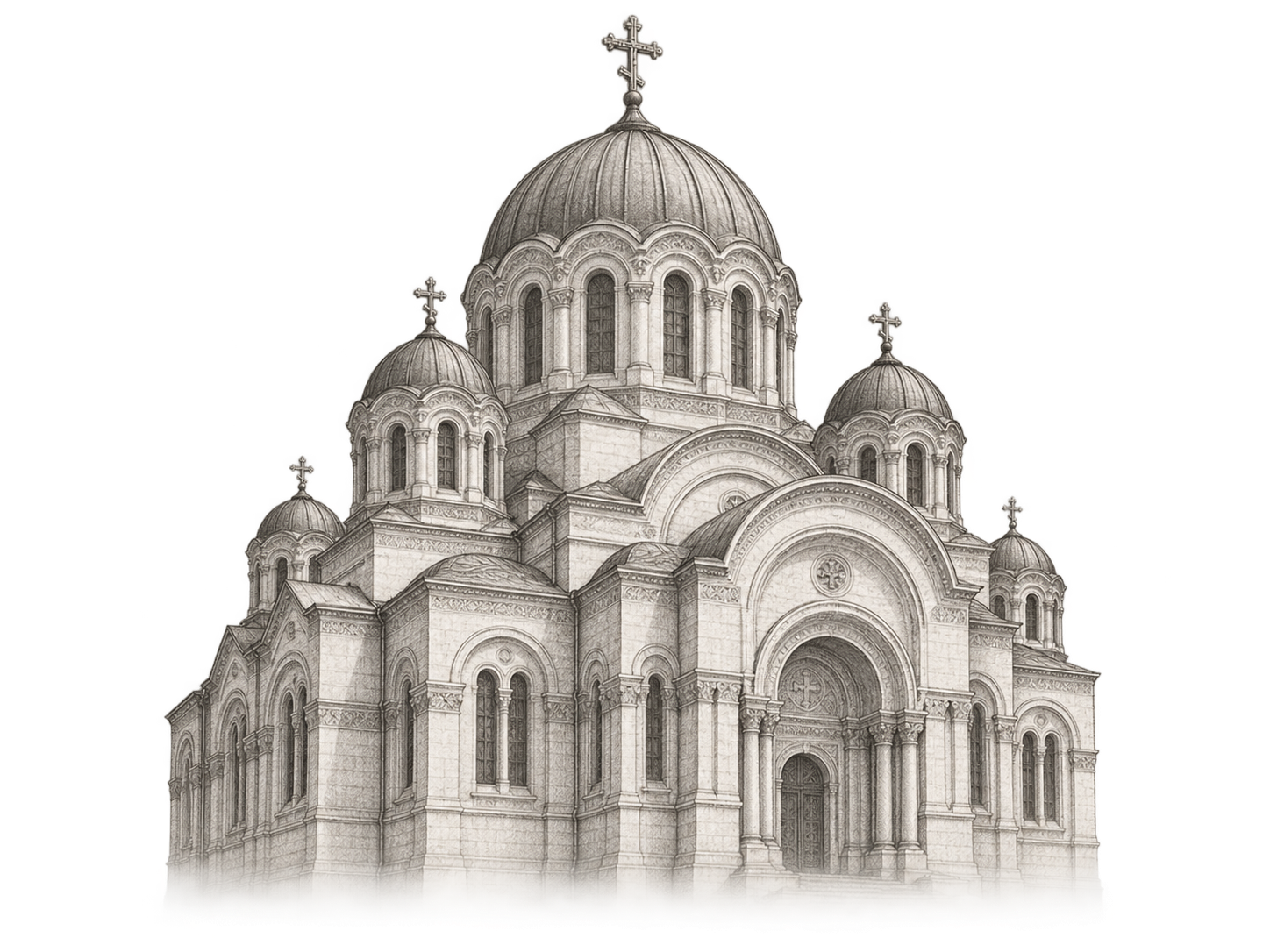
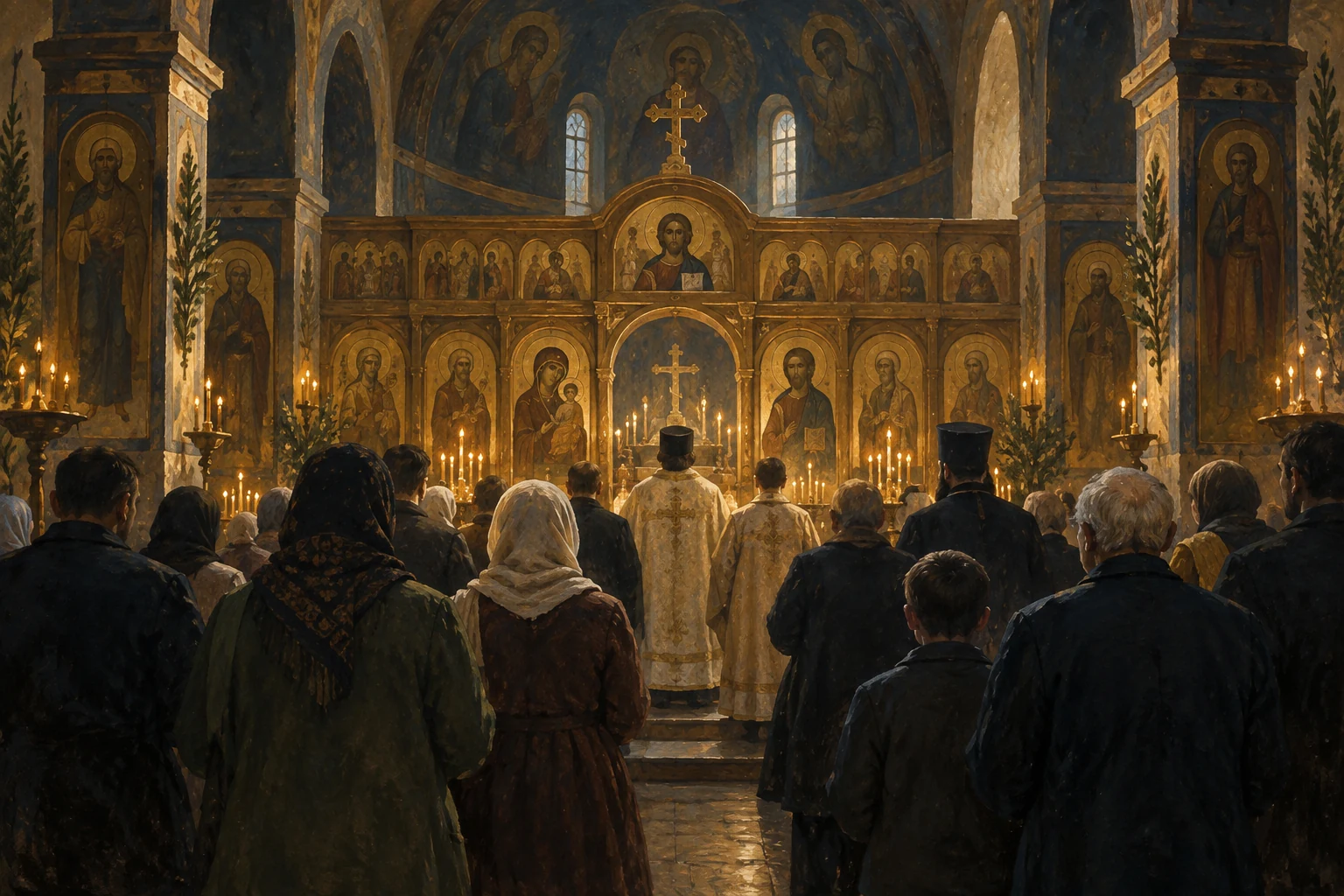
When I first encountered Orthodox Christianity, I had no idea what I was walking into. I didn’t know what Orthodoxy was before stepping into a church for the first time, and I certainly didn’t understand the history, traditions, or structures that had developed around it over nearly two thousand years. What began as an encounter with an unfamiliar expression of Christianity eventually opened up an entirely new world for me. The more I learned about the faith, the more I became interested in the people, history, and institutions that have carried it through the centuries. Somewhere along the way, I discovered that some of the questions I found most fascinating had less to do with theology itself and more to do with how the Church actually functions.
I wanted to understand who had authority, where that authority came from, and how it was exercised. I wondered why there were different Orthodox jurisdictions, how bishops related to one another, what happened when a priest disagreed with his bishop, and how decisions affecting entire communities were made. I became interested in the relationship between clergy and laity, the responsibilities of bishops, the role of councils and synods, and the processes through which the Church responds when something goes wrong. These weren’t questions I had necessarily set out to investigate when I first encountered Orthodoxy, but they became increasingly difficult to ignore as I learned more about the institution itself.
Looking back, I can see why those questions caught my attention. I studied political science at Texas Tech University, along with legal studies and professional writing, and my education taught me to examine the structures behind the world around me. Politics is often reduced to elections, political parties, and ideological disagreements, but political science reaches much further than that. It examines institutions, authority, governance, competing interests, decision-making, accountability, and the ways people organize themselves into systems that are supposed to function beyond the personalities of the individuals involved. Once I began looking at the Church through that lens, I recognized a familiar set of questions operating within an institution I was still learning to understand.
That discovery brought together interests I had previously considered separate. I had spent years studying political institutions and how they function, developed an interest in researching and communicating complicated subjects, and begun building a life within a religious tradition whose institutional structure I had never previously considered. Suddenly, these different parts of my life had something in common. I could approach questions about the Church with the curiosity of a political science student, the research habits of an investigator, and the perspective of someone who had a personal stake in understanding the institution he was studying. What emerged from that combination was a growing fascination with the politics of Christianity.
The word politics can make people uncomfortable when it is applied to the Church. In contemporary American life, we tend to associate politics with elections, campaigns, political parties, and the endless arguments that fill our television screens and social media feeds. But politics, in a broader sense, concerns how authority operates within a community, how decisions are made, how competing interests are reconciled, and how people respond when they disagree about the direction an institution should take. These questions do not disappear when people walk into a church. Wherever human beings organize themselves into communities, questions of leadership, responsibility, authority, and governance inevitably arise.
That does not mean the Church is simply another political organization. Christianity makes theological and spiritual claims that cannot be reduced to political science or organizational theory, and the purpose of the Church extends far beyond the administration of its institutions. But the people responsible for administering the Church are still human beings, and the structures through which they operate still matter. Priests have responsibilities, bishops exercise authority, parishes have leadership, dioceses have administrative structures, and jurisdictions maintain relationships with one another. The Church has to make decisions, resolve disputes, respond to misconduct, and determine what happens when the people responsible for its administration disagree. Its spiritual purpose does not eliminate the practical realities of institutional life.
This is where I find the intersection of faith and politics particularly interesting. A disagreement between a priest and parishioners may initially appear to be a personal conflict, but it can develop into a question about pastoral authority, diocesan oversight, or the responsibilities of clergy. A dispute involving a bishop may raise questions about jurisdiction, canonical procedure, or accountability. A group of Christians seeking to establish a new parish may have to navigate administrative requirements and relationships with ecclesiastical authorities that they barely understand. A disciplinary case involving a priest can raise questions not only about the individual involved, but also about what the institution knew, who was responsible for responding, what authority existed to take action, and how those decisions were ultimately made.
These situations are worth examining because they reveal how institutions function when their principles encounter difficult circumstances. Political science has taught me to look beyond the personalities involved and ask what structures produced a particular situation. Who had the authority to make a decision? Where did that authority originate? What rules applied? What accountability existed? Were the established procedures followed? What happened when those procedures failed to produce the intended result? Those questions do not automatically determine who is right or wrong, but they provide a framework for understanding what happened and why it matters.
My professional writing background provides another part of the picture. Institutional disputes and historical investigations can become difficult to follow when they are buried beneath years of correspondence, technical terminology, conflicting accounts, official documents, and personal testimony. The challenge is to organize that information into a coherent account without removing the complexity that makes the story important. I want to be able to take subjects that might otherwise seem inaccessible and explain them in ordinary language, allowing readers to understand the relevant history, identify the important questions, and distinguish documented facts from competing interpretations.
That approach is increasingly central to what I want TJP to become. The publication covers Christianity, politics, culture, current events, and the world around us, but those subjects are not as separate as they might initially appear. They all involve people trying to make sense of the world they inhabit, the institutions that shape their lives, and the decisions that affect their communities. I am interested in what happens when ideals meet reality, when authority encounters human weakness, and when institutions have to respond to circumstances that challenge the principles they claim to uphold. Sometimes those questions lead to political commentary, sometimes to cultural analysis, and sometimes directly into the institutional life of Christianity.
I also think these questions matter to people who are unfamiliar with the Church. Someone encountering Orthodox Christianity for the first time may be drawn to its worship, history, theology, or sense of continuity with ancient Christianity without having any understanding of how its institutions operate. They may not know what a diocese is, what a synod does, how a bishop relates to a priest, or why different Orthodox jurisdictions exist. Those details may seem secondary when someone is first discovering the faith, but they can become incredibly important when that person begins participating in the life of a parish. Understanding an institution does not require someone to become an expert in canon law, but it should be possible to ask basic questions about authority and governance without feeling that the questions themselves are somehow inappropriate.
The same curiosity extends beyond Orthodoxy. Catholicism has its hierarchy, dioceses, religious orders, canon law, and relationship with Rome. Orthodox Christianity has its bishops, dioceses, synods, monasteries, parishes, and distinct jurisdictions. Protestant traditions have developed denominations, conferences, presbyteries, congregational systems, and other forms of governance. Evangelical traditions don’t always necessarily have those hierarchical structures. That can be all the more difficult to understand whenever there is a dispute that arises with the power structure between leadership and their parishioners. These structures differ considerably, reflecting different understandings of authority and the historical circumstances in which they developed. Examining those differences offers a way to understand not only how Christians organize their communities, but also how their traditions shape their relationships with leadership, accountability, and one another.
The history of Christianity makes this subject even more compelling. The Church has existed through changing governments, political upheavals, wars, migrations, cultural transformations, and countless internal disputes. Its history includes councils, schisms, reforms, controversies, and disagreements over both theology and authority. Religious and political institutions have influenced one another in ways that cannot be understood by studying either in isolation. To understand how Christianity developed across centuries, we have to examine both what Christians believed and the institutions, relationships, and historical circumstances through which those beliefs were preserved, interpreted, and sometimes contested.
For that reason, I do not think examining church politics should automatically mean attacking the Church or defending it from criticism. Both approaches can prevent us from understanding what actually happened. Institutions should receive credit when the evidence shows that they acted responsibly, and they should face scrutiny when the evidence raises legitimate questions about their decisions. A complicated situation should not be forced into a convenient narrative simply because a straightforward story would be easier to tell. If the historical record complicates our assumptions, then the story should reflect that complexity.
Ultimately, I am interested in the relationship between the principles an institution claims to uphold and the way its people put those principles into practice. That question extends well beyond religion, but Christianity gives it a particular significance. Authority within the Church is not simply a matter of possessing the power to make decisions; it carries responsibilities toward the people affected by those decisions. Leadership is not merely an administrative function, and accountability is not necessarily an obstacle to institutional integrity. Understanding how those responsibilities are exercised can help us better understand the relationship between the Church’s teachings and its life in the world.
This is where my education, writing, and faith have unexpectedly come together. Political science gave me a framework for examining institutions and the ways authority operates within them. Professional writing gave me tools for researching complicated subjects and making them understandable to a broader audience. My experience with Christianity gave me a personal connection to the questions I was asking and a reason to care about the answers. I did not set out to combine these interests into a particular area of study, but the more I learned about the Church, the more naturally they began to overlap.
I suspect that is why I keep returning to the same questions about authority, governance, and institutional responsibility. They allow me to explore Christianity from a perspective that is both personal and analytical, examining the structures that shape the lives of believers without reducing the faith itself to those structures. They also give TJP room to explore subjects far beyond a single parish, jurisdiction, or religious controversy. The politics of the Church is one part of a much broader interest in the ways people, institutions, and ideas shape the world around us.
When I first encountered Orthodoxy, I had no idea that these questions would become such a significant part of my intellectual life. I was discovering a religious tradition that was entirely unfamiliar to me, and I gradually became interested in the history, people, and institutions surrounding it. That curiosity eventually connected with years of education and interests I had developed elsewhere, giving me a way to approach subjects that might otherwise have seemed unrelated. TJP has become the place where I can bring those interests together, investigate the questions that continue to fascinate me, and share what I learn with readers who may be asking many of the same questions themselves.
The relationship between faith and institutions is not always straightforward, and the politics that emerge within religious communities can be uncomfortable to examine. But these questions are part of the history and lived experience of Christianity, and they deserve thoughtful attention. I want TJP to explore them honestly, without assuming that every controversy is evidence of institutional failure or that every institution should be shielded from criticism. Sometimes understanding the story requires looking beyond the immediate dispute and examining the history, structures, and decisions that brought people to that point.
That is the territory I want to keep exploring: the intersection of faith, authority, politics, and the institutions we inhabit. It is where my academic background, my interest in writing, and my experience of Christianity meet, and it has given TJP a direction that feels both natural and worth pursuing. What began as curiosity about an unfamiliar religious tradition has grown into a much broader interest in how institutions work, how people exercise authority, and what happens when the principles we believe in have to be lived out in the real world.
Truth, Justice & Peace